How a Lithium-Ion Cell Actually Works
Feb 18, 2025
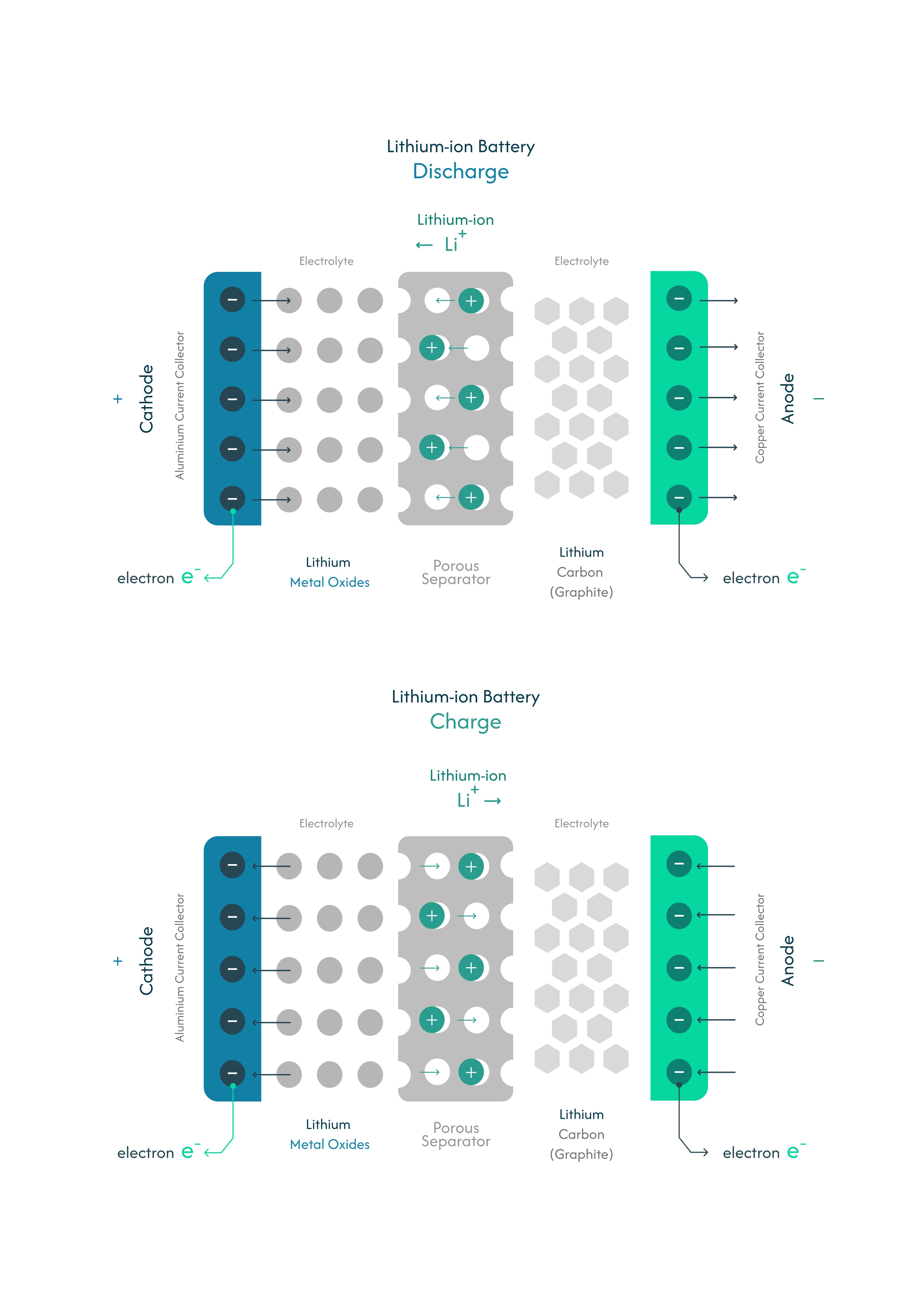
We rely on lithium-ion batteries every day, from the phone in your hand to the EV on the road. But what really happens inside these compact power sources? Here, we break down the inner workings of a lithium-ion cell in the simplest terms: what it's made of, how it stores and releases energy, and why lithium is the metal of choice.
Lithium-ion (Li-ion) batteries power almost everything we use today, from smartphones and laptops to electric vehicles and power tools. But most of us use them without really knowing what's going on inside.
So let's break it down in a simple way: what exactly happens inside a lithium-ion cell, and how does it store and release energy?
**The Basics of a Li-ion Cell**
At its core, a lithium-ion battery cell is made up of four main components:
1. **Anode** (typically made of graphite)
2. **Cathode** (usually a lithium metal oxide like lithium cobalt oxide or lithium iron phosphate)
3. **Electrolyte** (a liquid or gel that helps lithium ions move)
4. **Separator** (a thin barrier that keeps the anode and cathode from touching, but allows ions to pass through)
Each of these parts plays a very specific role in helping the battery charge and discharge.
**How It Works: Charging and Discharging**
Let's say you plug in your device to charge.
During charging, lithium ions move from the cathode to the anode through the electrolyte. At the same time, electrons flow through an external circuit and also end up at the anode. This builds up energy inside the anode like storing potential energy in a spring.
When you unplug and use your device, the reverse happens. The lithium ions move back to the cathode and the stored electrons flow through your device, powering it in the process.
This back-and-forth movement of ions is what allows a Li-ion battery to be recharged many times. The structure of the materials, especially the layered nature of the anode and cathode, allows lithium ions to move in and out without breaking things down too quickly.
**Why Lithium?**
Lithium is the lightest metal on the periodic table and has a high energy density. That means it can store a lot of energy without taking up much space ideal for portable electronics and EVs.
It also moves easily as an ion (Li⁺), which makes it perfect for the job of moving back and forth between electrodes.
**What Can Go Wrong?**
Li-ion batteries are generally safe, but like all tech, they can fail. Overheating, physical damage, or charging errors can lead to issues like swelling or thermal runaway (where the battery catches fire). That's why battery management systems BMS are so important as they monitor things like voltage, temperature and charge levels to keep everything in balance.
Understanding the basics of how a lithium-ion cell works helps us appreciate the technology we rely on every day and why there's so much focus on improving battery safety, performance and lifespan.
**Download our free Li-ion Cheat Sheet**
Want to learn more?
Our experts are ready to discuss how PeakAmp can help your organization achieve its sustainability goals.
Schedule a Consultation